
Bible Home - Read & Pray
Luxi LiuBooks & Reference
4.472.00 Reviews
- Version
- 1.2.4
- Installs
- 50.00K
- Age Rating
- Everyone
Screenshots
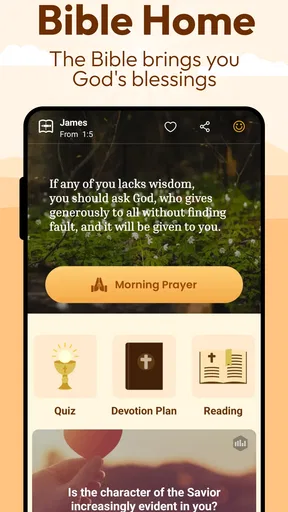
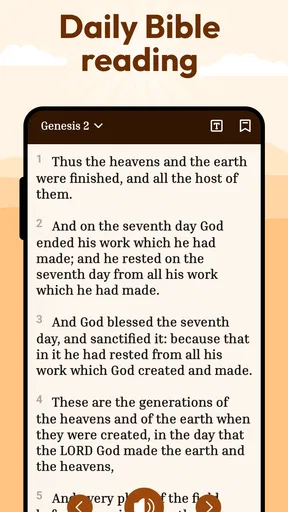
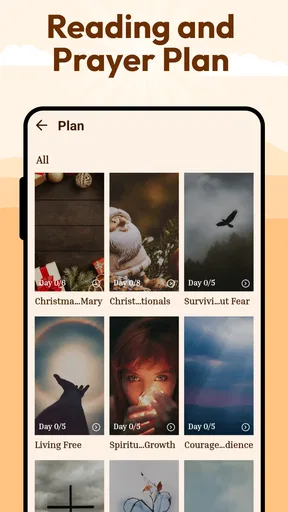

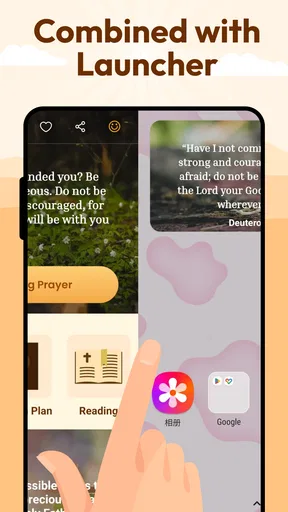
Our Review of Bible Home - Read & Pray
 Analysis by Appyee
I approached Bible Home - Read & Pray as a quiet reading companion rather than as a full replacement for every Bible tool on a phone. Its purpose is easy to understand: it brings Bible reading and listening to the Lord’s teachings into one place. That focused idea makes it appealing for someone who wants a simple starting point, especially when a crowded study app feels distracting.
In my experience, the most important question is not whether it contains enough religious material to sound impressive, but whether I can open it and settle into a passage without friction. Bible Home is aimed at that everyday moment: a short reading before work, a few minutes of reflection during a break, or an evening listening session when looking at a screen is inconvenient. It is a free Books & Reference app from Luxi Liu, rated for Everyone, and it runs on Android devices using version 6.0 or later.
The app has attracted over 50 thousand installs and holds a 4.4 average from more than 280 ratings, with over 70 written reviews. Those figures suggest that its straightforward approach works for a meaningful group of readers, although they do not tell me whether it will suit every church tradition, reading preference, or accessibility need. I found that the experience depends heavily on what I expect from a Bible app: calm and direct reading is its strongest territory, while advanced study and deep personalization are better handled by more specialized alternatives.
How comfortably can different readers navigate it?
I find that a reader’s comfort depends on more than how quickly they can reach a passage: confidence, pace, and familiarity matter too. In the next section, I look at how a focused reading-and-listening routine can lower the effort of getting started, while keeping in mind that different people may need different levels of guidance and control.
A focused starting point for Bible reading
The first strength is conceptual clarity. Bible Home does not ask me to learn a complicated study system before I can begin. The central activity is reading, with listening presented as another way to engage with the teachings. That matters for new readers, older family members, and anyone who wants to spend less time managing menus and more time with the text.
I would recommend approaching it with a small routine rather than opening it without a plan. For example, I might choose a short passage in the morning, listen to the same section later, and return to one line that stayed with me. This makes the app feel more useful than simply scrolling through chapters. It also reduces the chance of becoming overwhelmed by the size of the Bible itself.
Navigation is most helpful when the reader already knows what they want: a familiar book, a particular passage, or a listening session. A first-time reader may still need a little patience to decide where to start. In that situation, a printed reading plan, a church recommendation, or a separate study guide can provide more direction than a simple Bible reader.
Readability is more than font size
For me, readable religious text needs a calm presentation. Long passages can become tiring when the screen is crowded, the contrast is weak, or controls compete with the words. Bible Home’s value is tied to how comfortably I can remain with the passage, not just how quickly I can locate it.
Readers with low vision should test the app with their own device settings instead of assuming that a generally simple interface will solve every problem. System text enlargement, display scaling, and a brighter or dimmer screen may help, but enlarged text can also cause more scrolling. That trade-off is especially noticeable when reading a chapter one-handed on a smaller phone.
A useful habit is to turn off visual distractions around the reading session: reduce notifications, choose a comfortable brightness, and hold the phone at a stable distance. These are small adjustments, but they can make a bigger difference than switching between several reading apps. Someone with dyslexia or another reading difficulty may also prefer listening for longer passages and using the written text only for selected verses, if the available presentation suits them.
Listening changes the way the app can be used
The listening option is important because it opens the experience to people who cannot comfortably read for long periods. I can imagine using it while resting my eyes, following household tasks, or sitting quietly without wanting to hold the screen. It also gives a reader the chance to hear a passage before returning to it visually, which can support comprehension and reflection.
Audio is not automatically accessible for everyone. A person with hearing loss may need the written text, captions, or another visual aid, and a person with auditory processing difficulties may find spoken passages harder to follow than silent reading. Bible Home is therefore most inclusive when I treat reading and listening as complementary choices rather than assuming one format works for all users.
There is also a practical listening trade-off. Audio works best when I can give it attention, even if I am not looking at the phone. In a noisy kitchen, on public transport, or beside a conversation, the words may become difficult to follow. Headphones can improve clarity, but they are not suitable for every user or every setting. A quiet room and the written passage may be the better choice.
Motor, sensory, and everyday access
I would think about access in practical terms: how much tapping, scrolling, visual attention, and listening a session asks of someone on an ordinary day. The next section considers small adjustments—such as choosing a steady place for the phone and keeping a session brief—that may make Bible Home easier to fit around fatigue or limited dexterity, without assuming those adjustments suit everyone.
Reducing physical effort during a short session
A Bible app can be useful to someone with limited hand movement only if basic actions do not require constant precision. Opening a passage, starting listening, pausing, and moving through text are all more comfortable when controls are easy to identify and do not demand repeated tapping. I found that a focused app has an advantage here because there are fewer reasons to move rapidly between unrelated tools.
Still, a simple purpose does not remove every motor barrier. A reader with tremors, reduced dexterity, or fatigue may struggle with small controls, accidental taps, or repeated scrolling. The most practical approach is to keep sessions short, use a stable surface or phone stand, and rely on the device’s built-in interaction settings where helpful. Voice control or switch access may assist some people, but their usefulness depends on how the app’s controls are exposed to the operating system.
This is one area where a dedicated e-reader, a tablet, or a printed Bible can be better. A larger page reduces the need for precise finger movement, while paper avoids touch gestures altogether. On the other hand, a phone is easier to carry and can be ready when a physical book is not nearby. Bible Home makes the strongest case when portability matters more than a large reading surface.
Thinking about sound, light, and attention
Sensory comfort changes from person to person. Some readers want spoken scripture because it lowers visual strain; others find synthetic or unfamiliar narration distracting. Some prefer a bright page, while others need a dim display to avoid headaches. I would not judge the app only by how it looks in a well-lit room, because a real reading habit may happen late at night, outdoors, or during a period of tiredness.
For an evening routine, I would lower the screen brightness before opening a passage and avoid holding the phone too close. If listening, I would choose a volume that keeps the words clear without creating an uncomfortable sensory load. These adjustments are especially relevant for people who are sensitive to light or sound, although they cannot compensate for every limitation in the app itself.
Attention is another overlooked part of access. A person with anxiety, ADHD, or cognitive fatigue may benefit from a single-purpose screen and a predictable routine. I would open one passage, read or listen for a defined period, and close the app rather than browsing aimlessly. That workflow turns the app’s simplicity into a practical advantage.
Using it in different situations
One realistic scenario is a commuter who has ten quiet minutes before arriving at work. Reading a short passage may be easier than carrying a book, while listening could help when the phone is resting in a pocket or bag. Another is a family member who wants to share a daily reading with someone who has difficulty holding a Bible. One person can read while another listens, though the success of that arrangement depends on the phone speaker, the surrounding noise, and each person’s hearing.
The app also fits a low-energy day. When concentration is limited, I can choose listening instead of forcing myself through a long visual session. That does not make the content easier for everyone, but it gives the user a second path into it. For a caregiver, this flexibility may be useful during a quiet pause, provided the phone can be positioned safely and the session does not require constant interaction.
Offline or unreliable connectivity is a more important consideration for some users than for others. A person in a rural area, someone travelling, or anyone with a restricted data plan should test the app in the places where it will actually be used. I would not build an essential devotional routine around uninterrupted access until I had tried that situation myself. A printed Bible or an established offline reader remains the safer backup when connectivity is unpredictable.
Where the experience still has barriers
The app’s narrow focus is both its appeal and its limitation. I would not choose it as my main tool if I needed extensive cross-references, scholarly notes, original-language resources, elaborate reading plans, or detailed comparison between translations. Those features can be valuable for students, teachers, and serious Bible study, and a specialized study app will usually serve them better.
Likewise, readers who depend on a particular translation, a specific pronunciation style, or a carefully designed accessibility mode should check the actual reading and listening experience before making it their everyday tool. A store summary cannot answer those personal questions. The practical test is simple: open a passage that matters to you, enlarge the text if needed, listen in your usual environment, and see whether returning to the same place feels easy.
People who expect social features may also find the experience limited. Bible Home is most naturally used as a personal reading and listening space. It is not the right choice if the main goal is group annotation, shared study, sermon preparation, or structured discussion with a congregation. In those cases, a church platform, a study-focused Bible app, or a physical group workbook may create a better shared workflow.
There is a difference between being easy to start and being fully adaptable. A beginner may appreciate not having to configure many options, while an experienced reader may miss controls that would make the app fit a precise routine. That is why I see it as a gentle entry point and a convenient companion, not an all-purpose replacement for every format of Bible study.
Device age can matter too. The current version is 1.2.4, and the minimum requirement of Android 6.0 makes it available to many older phones. That is helpful for users who cannot upgrade hardware often. At the same time, an older device may have a smaller display, weaker speakers, or slower touch response, so the operating-system requirement alone does not guarantee a comfortable experience.
My inclusive verdict
My inclusive verdict is that flexibility comes from choosing the format and setting that match the person, not from expecting one app to meet every need. I weigh Bible Home most favorably as a portable option for readers who value a straightforward start, while recognizing that a larger screen, print, or a more specialized study tool can be the kinder choice in other circumstances.
Who I would recommend it to
I would recommend Bible Home to someone who wants a free, uncomplicated way to read and listen to scripture without turning devotional time into a technical project. It is particularly promising for people who alternate between visual reading and audio, readers who prefer short personal sessions, and families looking for a portable Bible option that can be shared in ordinary daily moments.
Its Everyone age rating also makes the intended audience broad, but suitability still depends on the individual reader’s needs. Children may need guidance from a parent or teacher, while older users may need help adjusting the phone’s text size, brightness, or audio volume. Inclusive use often comes from combining the app with the device’s existing settings and a routine that respects the reader’s energy and environment.
Who should look elsewhere
I would steer advanced students toward a more comprehensive study platform. I would also suggest a larger tablet, an e-reader, or print for anyone who finds phone scrolling physically tiring. Readers with hearing-related needs should prioritize a format that offers the visual support they require, and anyone who depends on a specific translation or robust offline access should verify those points through hands-on testing before committing.
The rating of 4.4 indicates a generally positive reception, but my own recommendation is more specific: choose it for focused access, not for a long list of specialist tools. Its greatest benefit is lowering the distance between wanting to read and actually beginning. Its greatest weakness is that simplicity can leave experienced or highly specific users wanting more control.
After using it as a reading companion, I see Bible Home as a considerate first step for people who want scripture close at hand and a listening option when reading is not comfortable. I would keep another format available for study, poor connectivity, large-print needs, or group work. The best way to use it is to match its simple design to a clear personal routine: select a manageable passage, choose reading or listening according to your energy and surroundings, and let the app support reflection rather than compete with it.
For a free Books & Reference app developed by Luxi Liu, that is a worthwhile balance. It does not try to be everything, and I think that restraint helps it serve its core purpose. If your priority is an approachable Bible experience that can fit around real life, it is worth trying; if your priority is advanced research or highly specialized accessibility support, a different tool will likely be the better companion.
Verdict
Strengths of Bible Home - Read & Pray
- Simple interface makes daily Bible reading easy to navigate.
- Prayer features encourage users to build a consistent spiritual routine.
- Useful for quiet reflection at home or while traveling.
- Content is suitable for both new and experienced Bible readers.
- Personalized reminders can help maintain regular devotional habits.
Limitations of Bible Home - Read & Pray
- Some features may require an internet connection to work properly.
- The app may feel limited for users seeking extensive study tools.
- Notification reminders could become distracting if enabled frequently.
- Reading preferences and customization options may be fairly basic.
- Content and translations may not meet every denomination’s preferences.
Similar Picks in This Category
View All
Google Play Books & Audiobooks
Google LLC4.7

네이버 - NAVER
NAVER Corp.3.5

Wattpad - Read & Write Stories
Wattpad.com3.7

King James Bible - Verse+Audio
Ozion4.8

Bible Offline-KJV Holy Bible
Bíblia Offline4.9

Amazon Kindle: Reading App
Amazon Mobile LLC4.8
Frequently Asked Questions
What is Bible Home - Read & Pray?
Bible Home - Read & Pray is a Christian-focused mobile app designed for daily Bible reading, prayer, and spiritual reflection. After exploring its main sections, I found that it combines Scripture access with devotional-style content and prayer features, making it suitable for users who want a convenient way to maintain a faith-based routine from an Android or iOS device.
Does Bible Home - Read & Pray work offline?
Offline availability may depend on the specific Bible version, devotional material, and app configuration. Some content can potentially be saved or loaded for later use, but users should not assume that every feature works without an internet connection. It is best to open the app while connected, check whether passages are available offline, and review its current download or storage options.
Is Bible Home - Read & Pray free to download?
The app can generally be downloaded without an upfront charge, although availability and pricing may vary by platform and region. Some features, reading plans, devotional materials, or subscription-based tools may require payment. Before confirming a purchase, check the app store listing carefully for in-app purchases, trial periods, renewal terms, and the exact content included in any premium plan.
Can I use Bible Home - Read & Pray for daily prayer and Bible study?
Yes, the app is primarily intended to support regular Bible reading and prayer. It can be useful for setting aside a few quiet minutes each day, following devotional material, and returning to Scripture from one place. However, it should be viewed as a personal study aid rather than a replacement for a church community, pastoral guidance, or more comprehensive theological resources.
Is Bible Home - Read & Pray suitable for beginners?
Bible Home - Read & Pray can be a practical choice for beginners because it brings Bible reading and prayer-related content into a straightforward mobile experience. New users may appreciate having guided material instead of searching through multiple resources. Still, the experience can vary according to Bible translation, available plans, advertisements, and premium restrictions, so reviewing the app’s current store details is recommended before downloading.
